

of proprietary software
of protected state border

with an integrated
anti-drone
system
ARGUS PSIM is used for facility security management through the supervision and control of integrated technical security systems. ARGUS PSIM is equipped with a UAV (Unmanned Aerial Vehicle) detection and neutralization module - a so-called anti-drone system.
The platform collects, processes, and displays on demand data received from multiple devices belonging to systems such as: IDS (SSWiN), VSS (CCTV), ACS (SKD), FAS (SSP), BMS, or SCADA. All data is presented on multi-level interactive maps within the graphical user interface. The status of each element is stored in a database along with its history. ARGUS PSIM processes information incoming simultaneously from technical security systems, ensuring fast operation.
The ARGUS PSIM software platform is fully produced in Poland.
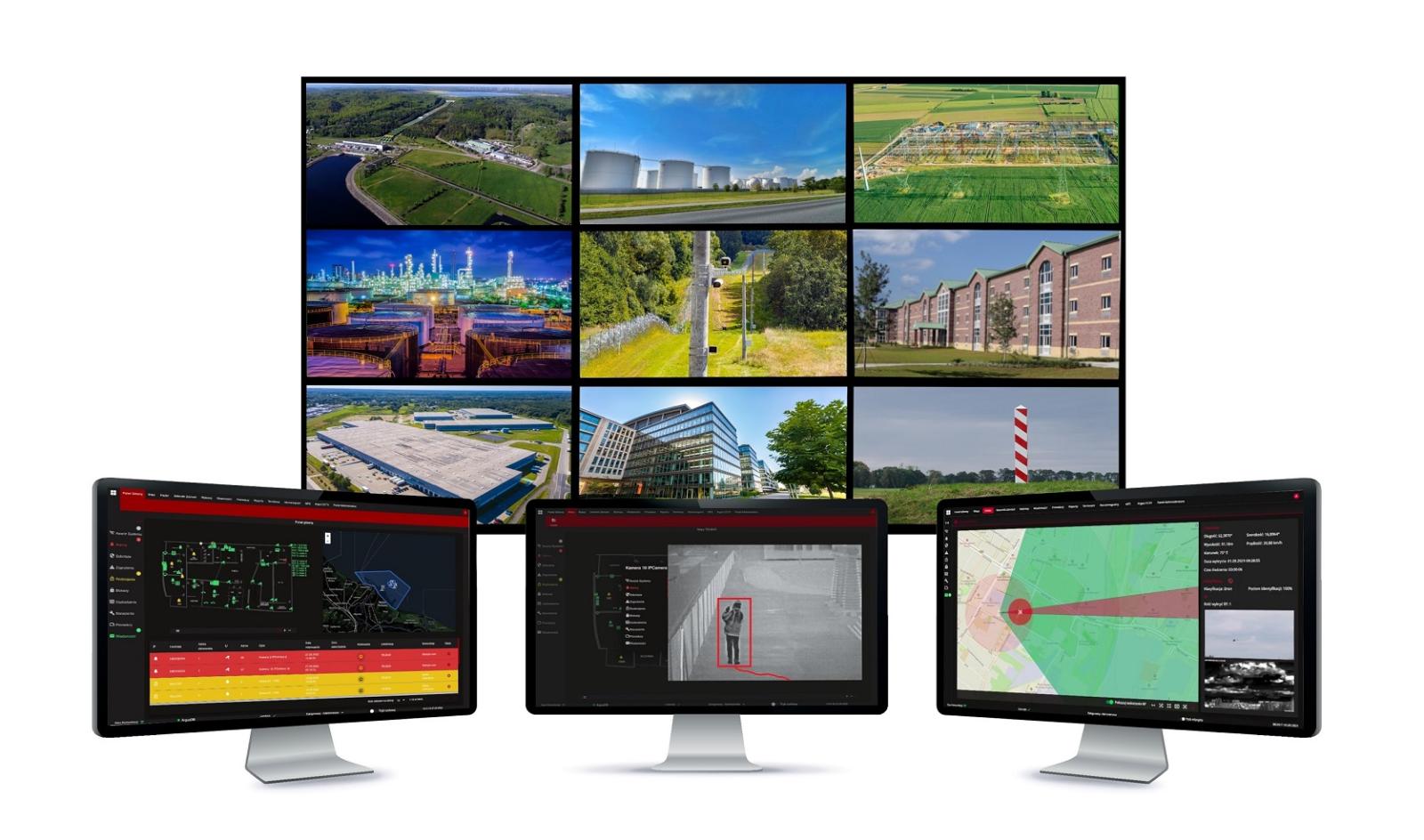
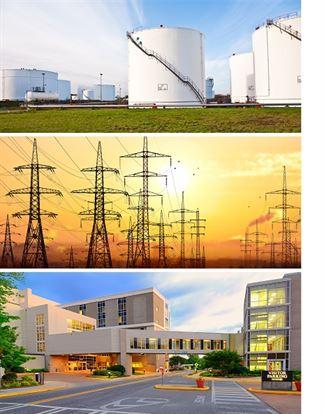
Thanks to its hierarchical architecture, the ARGUS PSIM system is an optimal solution for security management centers supervising technical security systems across multiple dispersed facilities over large areas.
It can manage the security of smaller, single sites (grounds and buildings). It is also an ideal solution for securing medium-sized companies that value security and simplicity in managing their technical protection systems.
The ARGUS PSIM software fully complies with the requirements of the Military Standard NO 04-A004:2016 (alarm systems), which means it can be used for integrating technical security systems at military facilities.
The ARGUS PSIM system features a modern graphical interface with enhanced ergonomics. The application stands out with its dark color theme, which significantly improves operator comfort.
Simplified system management can be conducted entirely by the administrator. When a threat is detected, the system notifies the operator via a log entry, an audible alarm, and a visual marker on the map.
Automated procedures are crucial for proper alarm event handling, intuitively guiding the operator through pre-programmed steps. The use of procedures ensures correct operator action even under high-stress conditions.
The system is built on a modular architecture, allowing modules to be freely enabled for specific users. Additionally, a specific set of signals can be assigned to each operator for monitoring. Supervision over the entire TSS (Technical Security System) can be divided by type-assigning each type to a specific operator - or geographically by area.
The ARGUS PSIM application was developed using Microsoft ASP.NET Core. This ensures high data transmission security, prevents data loss, and enables instantaneous response when a threat occurs.
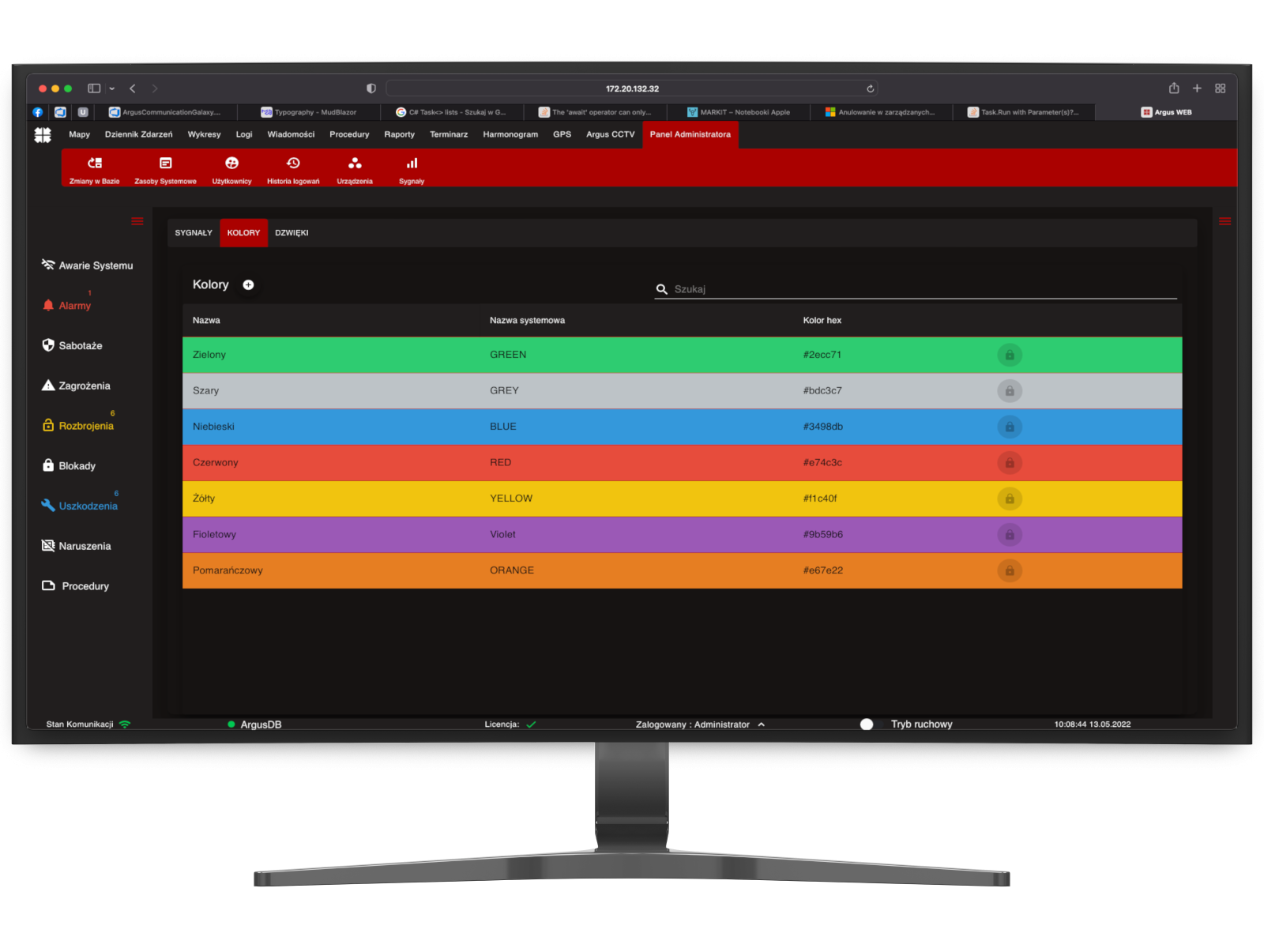
The system operates on a PostgreSQL database, which supports high-availability mechanisms. ARGUS PSIM features automatic mechanisms activated in the event of failure or communication loss. The mechanisms are fully scalable - additional database and server instances can be added to enhance system resistance to failures.
The database redundancy mechanisms ensure that if communication with the central server is lost, the system automatically fails over to one of the backup servers.
The ARGUS PSIM app can run on both a virtual machine or an actual server. ARGUS is based on the client-server structure, and the entire application is divided into an ARGUS PSIM application server launched as a server-based service and a client that can be installed on: Windows, Linux and macOS, as a desktop or browser application.
Data is stored centrally in the server app and can be provided to the client on demand.
It is impossible to act as ARGUS 2.0 software, because the data is sent to pre-authorized stations with a communication token.
Deploying the ARGUS PSIM integrating software enables expanding integrated technical security systems with new devices, such as power generators, network switches, interface hubs or other independent devices, such as body temperature cameras.
The deployment also enables expansion with additional security systems, facilities and more users operating the system.
ARGUS PSIM system
module
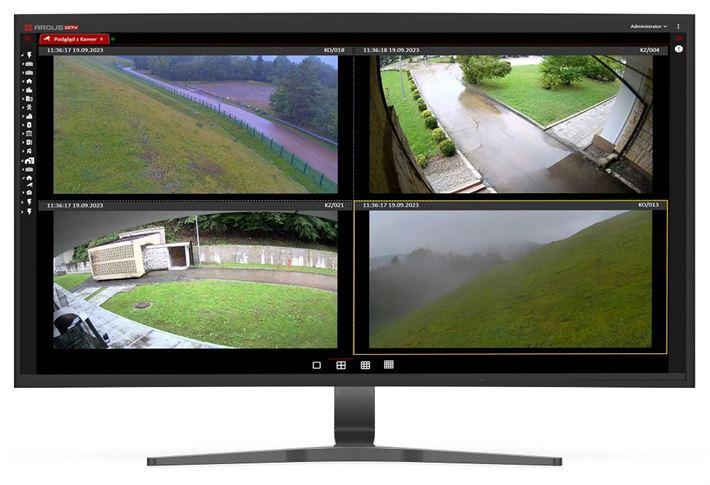
The ARGUS CCTV module offers advanced control over CCTV camera signals. They are controlled directly via a user interface.
It also enables, among other things, displaying images on numerous screens, tracking alarm situations, replaying events or creating backups.

ARGUS PSIM offers such features as:
- multi-factor system log in,
- graphic status display of integrated systems and equipment,
- multi-level vector graphics,
- system and facility event log,
- graphs,
- schedules,
- procedures,
- calendars,
- icon status,
- administrator and operator panels,
- modularity,
- UAV detection and neutralization module (anti-drone module),
- VSS/CCTV stream display (CCTV module).
- UAV detection
and neutralization system
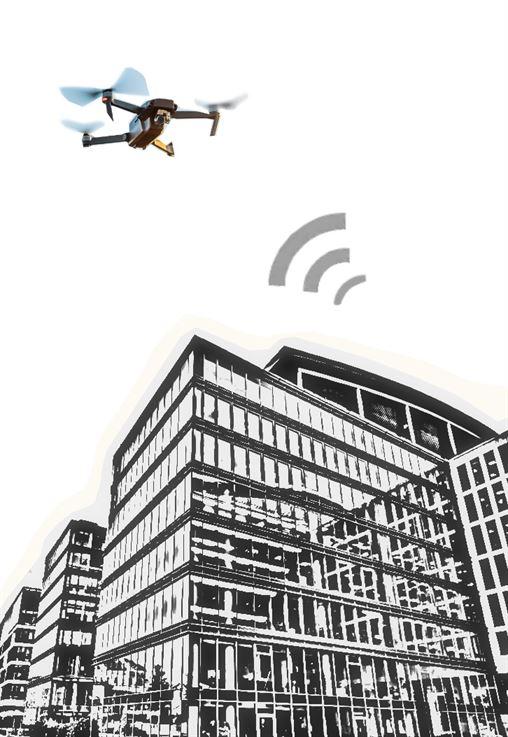
- Owing to full integration of the anti-drone system with the PSIM-class ARGUS platform, the operator can simultaneously use one system integrating also other security systems operating within a facility, such as access control, fire alarm system, CCTV or the intrusion detection with perimeter security.
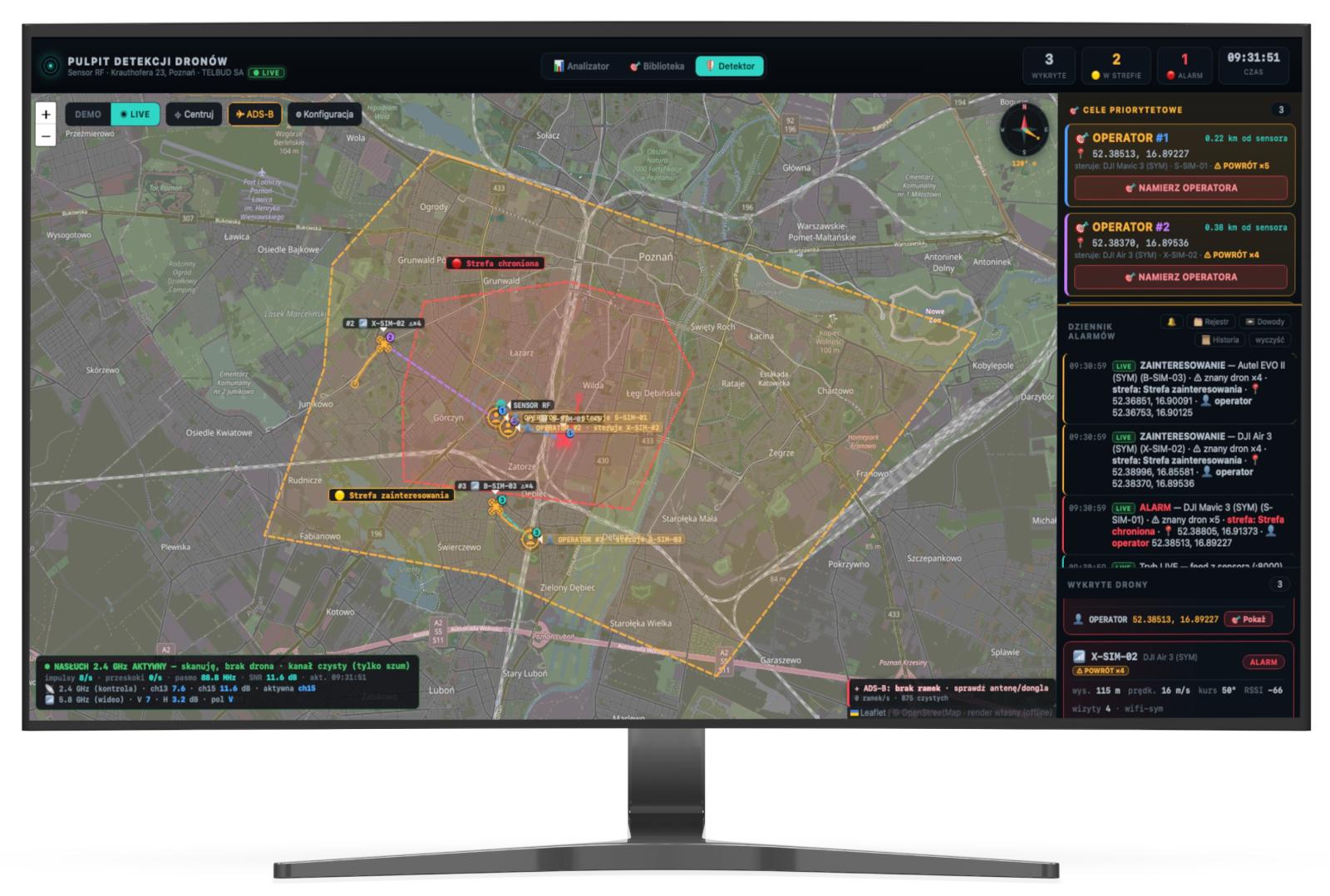
- The anti-drone system module within the ARGUS platform is based on a graphical background in the form of a vector map. The map displays all system elements in accordance with geographical coordinates.
- The system may include, depending on facility type and class, short- and long-range radars, various-frequency RF detectors, acoustic sensors, camera assemblies on precise swivel plates, and jamming devices.
- The camera assembly may include visible light cameras and thermal imaging cameras, cooled or uncooled.
- The software combines all signals from individual system components and then visualizes a UAV (drone) on the map.
- Each visualized unmanned aerial vehicle is assigned such parameters as communication protocol, latitude and longitude, flight altitude and flight speed. The map also display an object motion trajectory.
- The system offers preliminary, automatic object selection, which enables eliminating unwanted flying objects detected by the system (birds, airplanes).
- The system also enables creating many protection zones – from the most remote, informing that an aircraft is moving in the vicinity of the protected area, to closest, where object security is threatened – in such a situation, the system may respond automatically by activating radio wave jamming over selected frequencies or GPS/GLONASS, or the system operator may manually trigger jamming. The system enables activating and deactivating individual jamming bands. In addition, it can also track a flying object using a long-range camera.
- All proof of illegal air patrolling of the facility are recorded in an event log and, following an analysis, saved on a hard-drive and stored for a specified period of time. Recorded footage and object trajectory may be replayed on demand.
- The ARGUS CONTROL MB-POE-1000 module is the basic element of the ICT box or cabinet monitoring system. Its compact size enables its installation in any cabinet or box.
- It utilizes the REST API protocol to communicate with the integrating system, e.g.: ARGUS 2.0 or ARGUS RV.
- It boasts a built-in browser platform, which enables remote equipment status preview and configuration.
- Equipped with an RS485 bus, it enables expanding the features with new modules.
- It can be powered using a POE or an external 48 VDC power supply.
- The device is fitted with 8 parametrized ports that enable connecting a PIR sensor or reed relays. In addition, it has two relays that allow remote presence of any device.
- The device is also equipped with a 1-wire communication port for tieing-in a temperature and humidity sensor, e.g., DHT22. It can also power peripheral equipment using a 12 VDC outlet.
ARGUS RV is the previous version of our high-performance PSIM-class system for integrating technical security systems for large and scattered facilities.
Since 2000, in cooperation with Mikronika, the system has been under development based on the SYNDIS RV hardware-software platform.


